After the Podium: How Water Sports Pros Are Reinventing Themselves and Thriving
There's a moment every competitive water sports athlete eventually faces. The contest results start slipping. The sponsorship calls get a little quieter. The younger kids on the water are doing things you can barely keep up with anymore. And you're left staring at a question that nobody really prepares you for: What now?
For some, that transition is brutal — a freefall from identity, income, and purpose all at once. For others, it turns out to be the beginning of something they never saw coming. We spent time talking with athletes across disciplines — surfing, wakeboarding, whitewater kayaking, stand-up paddleboarding — to understand what separates the ones who land on their feet from those who struggle to find solid ground.
Spoiler: it's not luck. It's strategy.
The Shelf Life Problem Nobody Talks About
Professional water sports careers are shorter than most fans realize. A competitive surfer might peak in their mid-to-late twenties. A wakeboarder's window can close even earlier, especially when the sport demands the kind of aerial punishment that accumulates in joints and backs over years of hard landings. Kayakers might have a longer runway, but even they hit a wall eventually.
What makes this especially tricky is that the culture around action sports has historically glamorized the grind — the endless travel, the living-out-of-a-van freedom, the idea that if you love it enough, the money will figure itself out. That mythology doesn't leave a lot of room for honest conversations about financial planning or career pivots.
"Nobody sat me down at 22 and said, 'Hey, start thinking about what comes after,'" says one former professional wakeboarder from Florida who asked to stay unnamed while he builds his new coaching business. "You're just focused on performing, on staying on the tour. The future feels abstract until suddenly it's right in front of you."
Coaching: The Most Natural On-Ramp
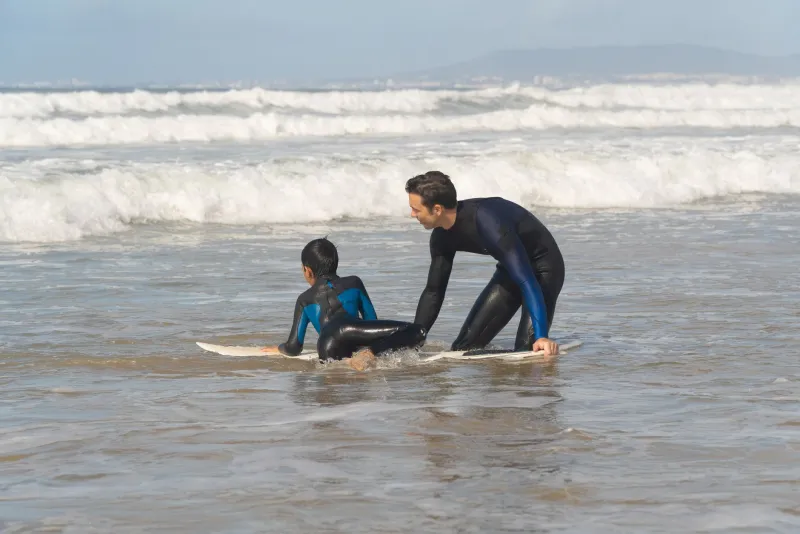
For many athletes, coaching is the first and most obvious move. It leverages what they already know, keeps them connected to the water, and — if done right — can become a genuinely scalable business.
But there's a big difference between coaching as a fallback and coaching as a deliberate enterprise. Athletes who thrive tend to niche down hard. One former competitive SUP racer from California now runs specialized performance camps aimed specifically at masters-division paddlers — people in their 40s and 50s with disposable income and real motivation to improve. She charges premium rates, keeps groups small, and has a waitlist that stretches months out.
"I stopped trying to coach everyone and started coaching the people who were most hungry to learn," she explains. "That focus changed everything for me."
Others are building hybrid models — combining in-person sessions with online programming, video analysis subscriptions, and digital training guides. The overhead is low, the reach is national (or global), and the revenue doesn't depend on being physically present every day.
Content Creation: Harder Than It Looks, More Rewarding Than You'd Expect
There's no shortage of former pros who've pivoted to YouTube, Instagram, or TikTok — and plenty who've flamed out trying. The ones building real audiences tend to share a few traits: they show up consistently, they bring genuine personality to their content, and they're willing to be vulnerable about the messy parts of athletic life, not just the highlight-reel moments.
A former competitive kayaker from the Pacific Northwest has built a loyal following by documenting his transition out of elite competition in real time — the uncertainty, the identity crisis, the process of rediscovering why he fell in love with the sport in the first place. His videos don't have the slickest production values, but they connect because they're honest.
"People can tell when you're performing for the camera versus actually sharing something," he says. "I spent years performing for judges. I had to unlearn that to make content that actually resonated."
Content creation also opens doors to brand partnerships that look different from traditional athlete sponsorships. Instead of being paid to wear a logo on a jersey, creators are getting hired for long-form storytelling campaigns, product launches, and ambassador programs that value reach and authenticity over contest results.
Product Design and the Insider Advantage
Some athletes are leveraging the most undervalued asset they have: years of firsthand product feedback. They know what gear fails, what it lacks, and what the average consumer — who never pushed equipment to its limits — would never think to ask for.
A handful of former competitive surfers have moved into advisory or co-design roles with board shapers and wetsuit companies. Others have gone further, launching their own small-batch gear lines targeted at serious enthusiasts who want performance without the mass-market compromises.
It's not an easy path. Manufacturing is complicated, margins can be brutal, and building a brand from scratch is a full-time job with no guaranteed paycheck. But for athletes who have both the credibility and the genuine product vision, it can be deeply rewarding — financially and creatively.
Environmental Advocacy: Turning Passion Into Purpose
Water sports athletes spend more time in and around the water than almost anyone. That proximity tends to breed a specific kind of environmental awareness — and increasingly, a specific kind of urgency.
Several former competitive athletes have found meaningful second chapters in environmental advocacy, partnering with nonprofits, launching cleanup initiatives, or becoming public voices for ocean and waterway conservation. Some have figured out how to monetize this work through speaking engagements, content sponsorships with eco-conscious brands, and grant-funded programs.
Beyond the financial angle, there's something powerful about athletes using their platform and credibility to fight for the places that gave them their careers. It's a story that resonates with sponsors, media, and fans alike — and it's one that only gets more relevant as climate change reshapes the water landscapes that define these sports.
The Mindset Shift That Makes It All Work
Every athlete we spoke with pointed to the same fundamental challenge: detaching their identity from their competitive results. For people who've spent their formative years defined by rankings, contest wins, and peer recognition within their sport, that's genuinely hard work.
The ones who navigate it best tend to reframe the transition not as an ending but as a next chapter — one where they get to apply everything they've built, just in a different direction. They stay curious. They're willing to be beginners again in new arenas. And they don't wait until the competitive career is fully over to start building what comes next.
"The worst thing you can do is wait until you're forced to figure it out," says the wakeboarder from Florida. "Start planting seeds while you're still competing. That way, when the time comes, you're not starting from zero."
The water doesn't care how old you are or what your last contest result was. Neither do the people who've figured out how to keep building a life around it. That's probably the most encouraging thing we heard: the ride doesn't have to end just because the competition does.