Paddling with Purpose: What Ancient Indigenous Water Wisdom Is Teaching Today's Adventure Community
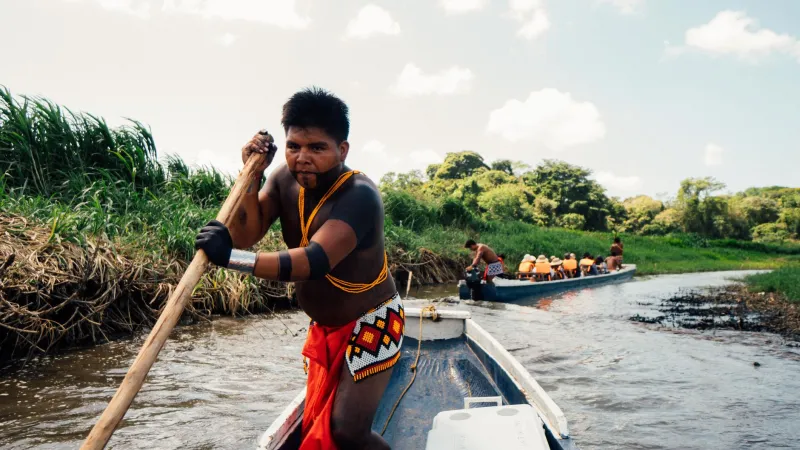
There's a moment on the water — you've probably felt it — when the river stops being a backdrop and starts feeling like something alive. The current shifts under your board, a sandbar appears where your map said there was nothing, and suddenly you realize you don't know this place as well as you thought you did.
For centuries, Indigenous communities across North America have known that feeling intimately. They built entire cultures around it. And now, a new generation of water sports athletes, adventure guides, and outdoor companies is starting to understand that the most important thing they can learn about the water might not come from a certification course or a gear catalog.
It might come from listening.
A Knowledge System That Runs Deeper Than Any App
When Melanie Runningwater, a citizen of the Confederated Salish and Kootenai Tribes in Montana, leads visitors along the Flathead River, she's not just pointing out the best fishing holes or the smoothest paddling lines. She's translating a living relationship — one her community has maintained with that watershed for thousands of years.
"We don't separate ourselves from the water," she explains. "The river isn't a resource we use. It's a relative we take care of. That changes everything about how you move through it."
That relational framework is something modern outdoor recreation has largely stripped away. We rate rapids by difficulty class, measure water temperature in Fahrenheit, and optimize our paddle strokes for efficiency. All useful stuff. But it's a transactional relationship — what can this river do for me today? — and Indigenous water traditions start from a completely different premise.
Across the country, from the Pacific Northwest's salmon-rich river systems to the Chesapeake Bay's tidal networks to the ancient canoe routes of the Great Lakes, tribal nations developed sophisticated navigation systems, water reading techniques, and conservation practices that kept waterways healthy for millennia. These weren't primitive workarounds. They were refined, tested, and passed down with the same rigor we'd associate with any scientific discipline.
The Shift Happening Inside the Adventure Industry
For a long time, outdoor recreation culture in the US had a complicated habit of borrowing from Indigenous traditions without credit — naming kayaks after tribal words, branding gear with vaguely "native" aesthetics, and leading tours through sacred waterways without any acknowledgment of whose land and water it actually was.
But something is shifting. Slowly, imperfectly, but genuinely.
Companies like Native Waters on Tribal Lands — a collaborative project involving multiple tribes and outdoor recreation organizations — are actively working to bring Indigenous water knowledge into mainstream adventure education. Their programs train guides in traditional ecological knowledge alongside conventional safety certifications, treating the two as equally essential.
Jordan Littlefish, a whitewater guide and member of the Eastern Band of Cherokee Indians, has been part of that effort for several years. He started noticing the gap when clients would float past culturally significant sites on the Nantahala River without any context. "They'd be having a great time, which is awesome," he says. "But they had no idea where they were, really. No idea what that water meant to the people who'd lived beside it forever."
Now his tours weave Cherokee river stories and land stewardship history into the experience. He's seen it change how people behave on the water — more careful, more curious, more quiet in the good way.
Reading the Water the Old Way
One of the most practical intersections between Indigenous knowledge and modern water sports is navigation and water reading. Before GPS, before topographic maps, before any of the tools we now take for granted, Indigenous navigators were moving through vast water systems with a precision that still impresses researchers.
The Polynesian wayfinding tradition — which influenced Indigenous Pacific Islander communities throughout Hawaii and influenced later coastal cultures — used wave patterns, star positions, bird behavior, and even the temperature of the water beneath a canoe to navigate open ocean. On the mainland, tribes throughout the Great Plains and Southeast developed intricate knowledge of seasonal river behavior, flood patterns, and fish migration timing that informed where and when to travel.
For contemporary paddlers and surfers, there's real, applicable skill buried in those traditions. Learning to read a river by its surface texture, to understand a coastline by the behavior of its birds, to anticipate a weather shift by the smell of the water — these are skills that make you a better, safer, and more connected water person. They're also skills that Indigenous educators are increasingly willing to share, when approached with respect.
"I'm not interested in being a museum exhibit," says Runningwater plainly. "But if someone comes to learn — actually learn, not just consume — then this knowledge is meant to be used. It's meant to keep people and waterways safe."
The Sustainability Connection
Here's where things get urgent. American waterways are in trouble. Drought, pollution, overdevelopment, and climate disruption are stressing river systems, lakes, and coastal zones that outdoor recreation depends on. The adventure community has a direct stake in healthy water — and Indigenous communities have been sounding the alarm about water health for decades, often without being heard.
Tribal water rights cases across the American West have repeatedly put Native nations at the center of conservation battles that the broader outdoor community eventually rallied behind. The fight over the Bears Ears watershed, the ongoing protection efforts around the Klamath River basin, the Standing Rock protests over pipeline threats to the Missouri River — in each case, Indigenous water stewards were leading the charge while mainstream outdoor culture was slow to show up.
That's changing too. Brands, athletes, and advocacy organizations are increasingly centering Indigenous voices in water conservation conversations, not as symbolic gestures but as substantive partnerships. When professional kayaker and environmental activist Nouria Newman speaks about river conservation, she's increasingly sharing the stage with tribal water leaders. When the American Canoe Association develops stewardship curricula, Indigenous ecological knowledge is being written into the framework.
How to Actually Show Up
If you're reading this and feeling inspired — good. But inspiration without action is just a nice feeling. Here's what showing up actually looks like for water sports enthusiasts:
Learn whose water you're on. Before your next trip, spend ten minutes on Native Land Digital (native-land.ca) and find out which tribal nations have historical ties to the waterway you're visiting. It's a small act that reframes everything.
Seek out Indigenous-led experiences. Book a tour with a Native guide. Support tribal-operated outfitters and recreation programs. Put your money where your curiosity is.
Listen more than you talk. This one's hard for the adventure crowd, which trends toward enthusiasm and expertise. But the most important skill in any learning relationship is knowing when to stop performing and start absorbing.
Advocate for tribal water rights. The waterways you love to paddle, surf, and swim in are often the same ones tribal nations are fighting to protect. That's not a coincidence. Get involved.
The Water Remembers
There's a concept that comes up repeatedly when Indigenous water stewards talk about their relationship to rivers, lakes, and oceans: the idea that water holds memory. That it carries the history of everything it's touched, everywhere it's been.
It's poetic. It's also, increasingly, supported by science — water's molecular structure does respond to its environment in ways researchers are still mapping.
But you don't need a chemistry degree to feel what that idea points toward. Get on the water enough times, in enough different places, and you start to understand that you're not the first person to read that current, to navigate that channel, to feel that particular quality of light on that particular bend of river.
Someone was here before you. They knew this place deeply. And if you're willing to learn, some of that knowledge is still available — carried in community, in story, in the water itself.
Ride every wave. But maybe first, ask whose wave it is.