Why the Best Surfers in the World Stopped Just Surfing
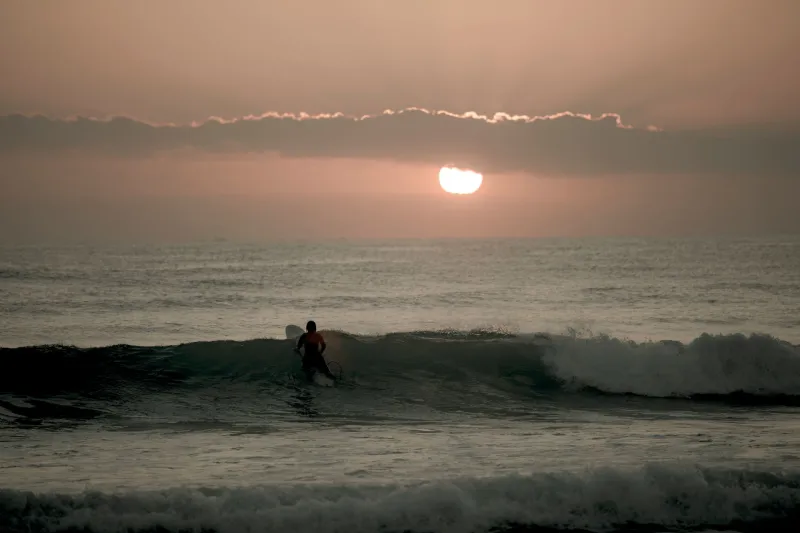
For most of surfing's history, the training philosophy was pretty simple: surf more. Log more hours, paddle more miles, catch more waves. The ocean was the gym, the coach, and the classroom all at once.
That model isn't dead. Time in the water is still irreplaceable. But somewhere in the last decade, the best surfers on the planet quietly started doing something different — and the performance gap between those who adopted it and those who didn't is getting hard to ignore.
We're talking about a wholesale reimagining of what it means to train for surfing. Yoga mats are appearing in van setups. Climbing walls are going up in garages. Freedivers are teaching breath control clinics to surfers who've been on tour for fifteen years. And the results are showing up in heats, in injury rates, and in careers that are lasting longer than anyone expected.
The Problem With Only Surfing
Here's the uncomfortable truth about surfing as a training method: it's incredibly one-sided.
The paddling motion creates significant anterior shoulder and chest dominance while leaving the posterior chain — the muscles running along your back, glutes, and hamstrings — relatively underdeveloped. The explosive pop-up builds reactive leg strength but doesn't develop the sustained lower body power that helps you drive through turns on larger, more powerful waves. And the nature of surfing itself — lots of waiting, short bursts of intense activity — doesn't do much for aerobic base or breath efficiency.
"Surfing will make you a better surfer up to a point," says conditioning coach and former competitive shortboarder Derek Noa, who works with several athletes on the Championship Tour. "But if you want to break through a performance ceiling, you have to address the physical gaps that surfing creates, not just reinforce the patterns it already rewards."
What the Pros Are Actually Doing
Yoga: Not Just Flexibility
The image of a professional surfer doing yoga isn't new — Kelly Slater was photographed in warrior pose before most of his competitors knew what a downward dog was. But the way top surfers are incorporating yoga has evolved beyond basic flexibility work.
Contemporary surf-specific yoga focuses heavily on spinal mobility, hip rotation, and proprioception — the body's awareness of its own position in space. That last one is particularly critical. When you're mid-turn on a fast wall and your board is accelerating under your feet, proprioception is what keeps you upright. It's trainable, and yoga is one of the most efficient ways to train it.
Griffin Colapinto, one of the most technically refined surfers currently competing on tour, has spoken publicly about how consistent yoga practice changed the way he feels in the water — less bracing, more fluid. "I used to fight waves," he told a surf media outlet last year. "Now it feels more like a conversation."
For recreational surfers and paddlers, the takeaway is straightforward: 20 to 30 minutes of mobility-focused yoga three times a week will produce noticeable changes in your water movement within a month.
Breathwork: The Competitive Edge Nobody Talks About
This one might be the most underrated development in surf performance training, and it has implications for every water sport.
Freediving-influenced breathwork — techniques like CO2 tolerance tables, hypoxic training, and diaphragmatic breathing drills — is increasingly common in the training routines of elite surfers. The reasons are obvious once you think about them: big wave surfing can involve hold-downs lasting 30 seconds to two minutes. Even in smaller surf, the ability to stay calm and oxygenated under pressure directly affects decision-making and performance.
But the benefits extend beyond emergency scenarios. Better breath control lowers resting heart rate, improves recovery between waves, and — perhaps most interestingly — has a documented effect on anxiety management. Surfers who train breathwork report feeling less rattled by heavy sets, less fatigued in long heats, and more able to stay present during critical moments.
Carissa Moore, four-time World Surf League champion, has incorporated breathwork as a core component of her training and has credited it with helping her manage competitive pressure. For anyone paddling out in challenging conditions, that's a transferable skill worth developing.
Starting point: Look up the Wim Hof breathing method or freediver-taught CO2 tables on YouTube. Practice dry, on land, before attempting anything in or near the water.
Strength Climbing: Building the Body a Wave Demands
This one raised eyebrows when it started showing up in surf training programs, but the crossover logic is sound.
Rock climbing — particularly bouldering — builds grip strength, upper body pulling power, core tension, and the ability to read dynamic movement problems in real time. That last quality is surprisingly relevant to surfing: both sports require you to process a three-dimensional, constantly shifting environment and make micro-adjustments faster than conscious thought allows.
The posterior chain engagement in climbing also directly counteracts the anterior dominance that surfing creates. Pull-through movements on a climbing wall develop the exact muscles that get neglected in the water.
John John Florence, widely considered one of the most complete surfers of his generation, has been photographed climbing regularly and has talked about its effect on his shoulder health and overall body awareness. Several athletes on the men's and women's CT have followed suit.
For non-surfers reading this: the same logic applies to kayakers, paddleboarders, and kitesurfers. Climbing two or three times a week addresses muscular imbalances that accumulate from repetitive paddle sports and reduces injury risk significantly.
Building Your Own Cross-Training Stack
You don't need a full-time conditioning coach or a garage climbing wall to apply any of this. Here's a realistic weekly framework for a recreational water sports athlete:
Monday: 30-minute yoga session focused on hip openers and spinal rotation. Plenty of free options on YouTube specifically designed for surfers and paddlers.
Wednesday: Breathwork practice (10–15 minutes) followed by a strength session emphasizing pulling movements — rows, pull-ups, deadlifts. These directly address the imbalances created by paddle sports.
Friday: Bouldering session at your local climbing gym (most mid-size American cities have at least one). Start with easy problems and focus on body positioning over raw strength.
Weekend: Get in the water. All the cross-training in the world is in service of this.
The Bigger Picture
What's happening in professional surfing is a reflection of something broader: the best athletes in every discipline are increasingly looking outside their sport for the edges that can't be found within it. The willingness to look strange doing yoga in a parking lot, or to spend a Saturday at a climbing gym instead of the beach, is exactly what separates athletes who plateau from those who keep growing.
The water doesn't care how many hours you've logged. It only responds to what you bring to it. Right now, the people bringing the most interesting things are the ones who've been doing their homework on dry land.